

Cassava Bags Market Size is Estimated to Reach US$ 145.0 Mn by 2035 Amid Rising Demand for Biodegradable Packaging - TMR
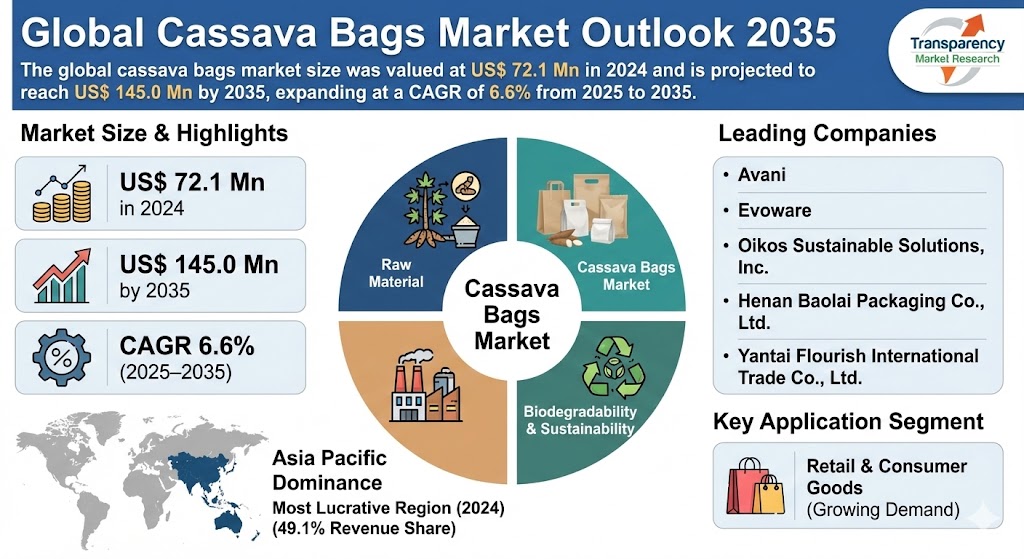
Cassava Bags Market
The global cassava bags market size was valued at US$ 72.1 Mn in 2024 and is projected to reach US$ 145.0 Mn by 2035
Asia Pacific dominated the Cassava Bags Market in 2024, holding the largest revenue share of 49.1%.
”
WILMINGTON, DE, UNITED STATES, February 19, 2026 /EINPresswire.com/ -- The global cassava bags market was valued at US$ 72.1 Mn in 2024 and is projected to reach US$ 145.0 Mn by 2035, expanding at a CAGR of 6.6% from 2025 to 2035. The market is witnessing steady growth due to rising environmental concerns, increasing restrictions on single-use plastics, and growing demand for biodegradable and compostable packaging solutions across retail, food service, and e-commerce sectors.— Transparency Market Research
Cassava bags are biodegradable bags made primarily from cassava starch, a renewable and plant-based raw material. These bags are designed to decompose naturally in soil or composting conditions without leaving harmful residues. Their eco-friendly properties and plastic-like functionality make them a promising alternative to conventional polyethylene bags.
👉 Get your sample market research report copy today@ https://www.transparencymarketresearch.com/sample/sample.php?flag=S&rep_id=86860
Market Overview
Growing awareness about plastic pollution and its impact on marine ecosystems, wildlife, and human health has accelerated the shift toward sustainable packaging. Governments worldwide are implementing stringent regulations and bans on plastic carry bags, encouraging manufacturers and retailers to adopt biodegradable alternatives such as cassava-based bags.
Cassava bags offer several advantages, including biodegradability, compostability, non-toxicity, and comparable strength to traditional plastic bags. In some cases, they are even soluble in hot water, leaving no microplastic residue. These characteristics are increasing their adoption in supermarkets, grocery stores, fashion retail, and food delivery services.
Key Market Drivers
Increasing Plastic Ban Regulations
Numerous countries and municipalities have introduced bans or taxes on single-use plastic bags. Such regulations are compelling retailers and packaging companies to explore eco-friendly alternatives. Cassava bags, being plant-based and compostable, align well with these sustainability mandates.
Rising Consumer Preference for Sustainable Packaging
Consumers are becoming more environmentally conscious and are actively seeking brands that demonstrate responsible environmental practices. Businesses are leveraging cassava bags to enhance their green branding and corporate social responsibility initiatives.
Growth of the Retail and E-commerce Sector
The rapid expansion of online shopping and organized retail has increased demand for packaging materials. As sustainability becomes a key differentiator in competitive markets, companies are increasingly adopting biodegradable packaging solutions.
Abundant Raw Material Availability
Cassava is widely cultivated in tropical regions, particularly in Asia and Africa. The availability of cassava starch as a renewable feedstock supports scalable production and reduces dependency on fossil-fuel-based raw materials.
Key Developments in Cassava Bags Market
In October 2025, Oikos Sustainable Solutions was reported to have expanded its partnership with Filipino businesses, which had shifted from single-use plastics to cassava- and corn-based packaging.
In September2025, Bulacan-based startup Ako Packaging launched 100% compostable plastic bags made from cassava starch, thereby offering local businesses a sustainable alternative to conventional plastics that degrade slowly.
👉 To buy this comprehensive market research report, click here to inquire@ https://www.transparencymarketresearch.com/checkout.php?rep_id=86860<ype=S
Regional Analysis
Asia-Pacific is expected to dominate the cassava bags market during the forecast period. Countries such as Indonesia, Thailand, Vietnam, and India are major producers of cassava and are increasingly adopting sustainable packaging solutions. Government initiatives promoting biodegradable materials further strengthen regional growth.
Europe is witnessing strong demand due to strict environmental regulations and high consumer awareness regarding sustainability. The European Union’s policies aimed at reducing plastic waste are encouraging adoption of compostable alternatives.
North America is experiencing gradual growth as businesses transition toward environmentally friendly packaging to meet consumer expectations and regulatory guidelines.
Latin America and Africa also present growth opportunities due to increasing cassava cultivation and growing environmental awareness.
Competitive Landscape
The cassava bags market is characterized by the presence of innovative startups and regional manufacturers focused on sustainable packaging solutions. Companies are investing in research and development to improve product durability, reduce production costs, and enhance compostability performance.
Affinity Supply Co.
Avani
Evoware
Henan Baolai Packaging Co., Ltd.
LALAPLAST
Maxrich Co., Ltd.
Oikos Sustainable Solutions, Inc.
PT. Urban Plastik Indonesia
Rajmo Industries
SainBag
SavaBag
Yantai Flourish International Trade Co., Ltd.
Other Key Players
Strategic collaborations with retailers and e-commerce companies are becoming common to expand market reach. Branding and certification, such as compostability standards, play a significant role in building consumer trust.
Market Challenges
Despite promising growth, the market faces challenges such as relatively higher production costs compared to conventional plastic bags. Limited large-scale manufacturing facilities and lack of awareness in certain regions may hinder adoption.
Performance limitations under certain environmental conditions, such as high humidity or heavy load-bearing requirements, can also pose challenges. However, ongoing innovation and technological improvements are expected to address these concerns over time.
Future Outlook
The cassava bags market is set to expand steadily through 2035, supported by global sustainability initiatives and increasing consumer demand for eco-friendly alternatives. Technological advancements in biodegradable polymers and improved production efficiency are likely to reduce costs and enhance product performance.
As environmental regulations become stricter and plastic waste management challenges intensify, cassava bags are expected to gain wider acceptance across industries. By 2035, the market is projected to reach US$ 145.0 Mn, reflecting sustained growth and rising adoption worldwide.
The anticipated CAGR of 6.6% underscores the growing importance of biodegradable packaging solutions in achieving long-term environmental sustainability goals.
FAQs – Cassava Bags Market
Q1. What is the projected market size by 2035?
The market is expected to reach US$ 145.0 Mn by 2035.
Q2. What is the expected CAGR during the forecast period?
The market is projected to grow at a CAGR of 6.6% from 2025 to 2035.
Q3. What factors are driving market growth?
Key drivers include plastic ban regulations, rising consumer preference for sustainable packaging, and growth in retail and e-commerce sectors.
Q4. Which region leads the market?
Asia-Pacific is expected to dominate due to abundant cassava production and increasing sustainability initiatives.
Q5. What challenges does the market face?
Higher production costs and limited large-scale manufacturing capacity are key challenges.
More Trending Research Reports-
Flooring Market : https://www.transparencymarketresearch.com/flooring-market.html
Produced Water Treatment Market: https://www.transparencymarketresearch.com/produced-water-treatment-market.html
Abhishek Budholiya - Marketing Team
Transparency Market Research Inc.
+ +1 518-618-1030
email us here
Legal Disclaimer:
EIN Presswire provides this news content "as is" without warranty of any kind. We do not accept any responsibility or liability for the accuracy, content, images, videos, licenses, completeness, legality, or reliability of the information contained in this article. If you have any complaints or copyright issues related to this article, kindly contact the author above.
