

Your best source on government and non-profits news from the United States
Provided by AGP
QuantumScape Executive GS Jha Says AI Will Change Civilization, Warns Companies About Shadow AI at CAIO Connect Podcast

CAIO Connect Podcast
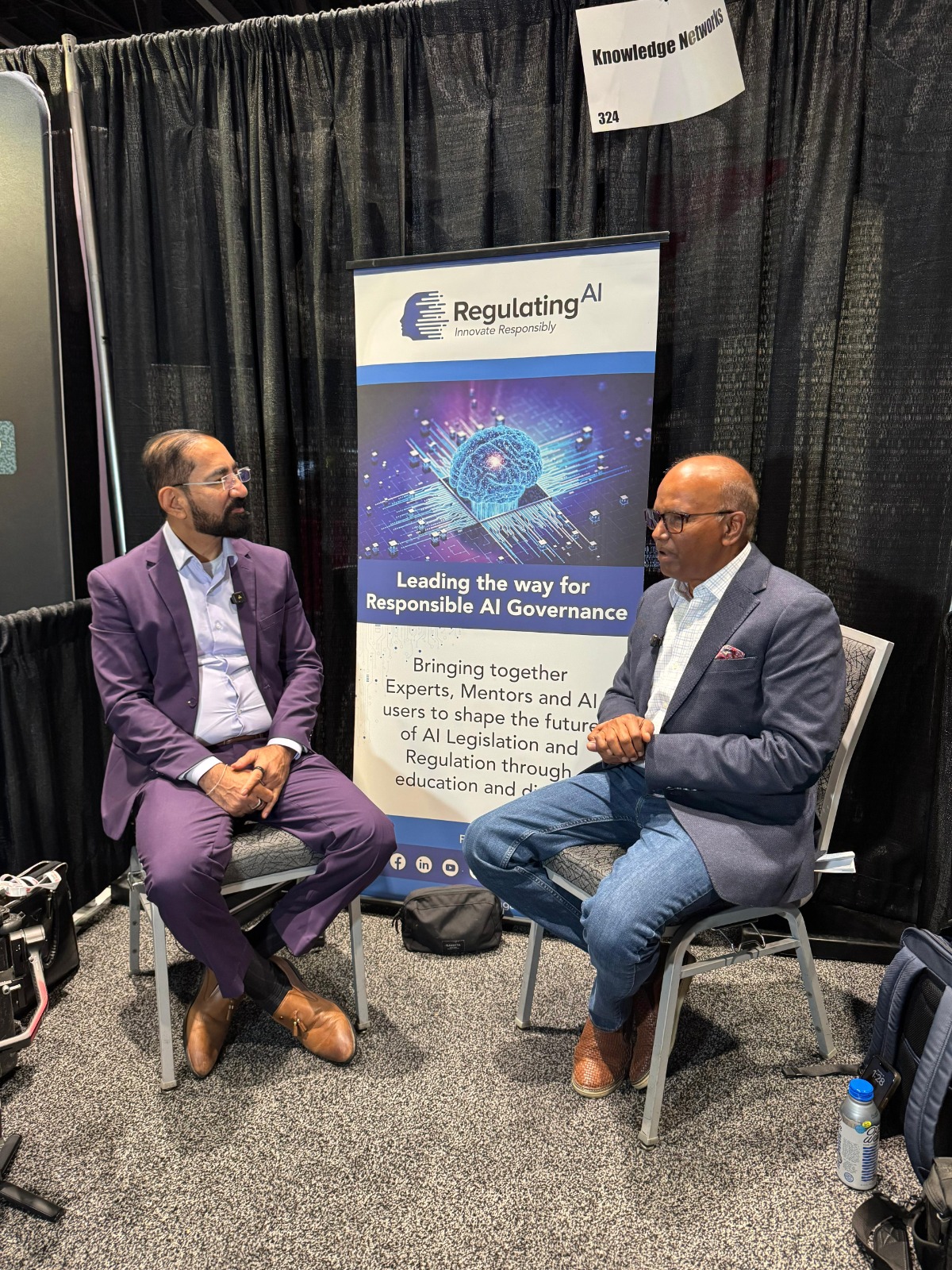
GS Jha, Global CIO, CISO & Chief AI Officer at QuantumScape, with Sanjay Puri, President of CAIO Connect
QuantumScape executive GS Jha told the CAIO Connect Podcast at TechEx that AI will reshape civilization while security and governance stay critical.
AI is data hungry and only as good as the data that you feed in.”
SAN JOSE, CA, UNITED STATES, May 20, 2026 /EINPresswire.com/ -- At the TechEx conference in San Jose, the CAIO Connect Podcast hosted a wide-ranging discussion on artificial intelligence, cybersecurity, and the future of work with GS Jha, Global CIO, CISO & Chief AI Officer at QuantumScape. Host Sanjay Puri introduced Jha as a rare technology leader who serves as CAIO Connect, CISO, and head of enterprise AI enablement at the same company. During the interview, Jha described AI as a historic technological shift that could reshape civilization in the same way as the printing press, steam engine, and electrification.— GS Jha
Jha shared details about his background, which spans software engineering, cybersecurity, life sciences, and enterprise technology leadership. He started his career as a Unix and C++ programmer at Federal Express in the 1990s before moving into leadership roles. After spending more than 16 years in the life sciences industry, where he helped develop FDA-cleared medical software, Jha moved into the high-tech sector around 18 months ago. At QuantumScape, he now manages IT operations, cybersecurity, and AI strategy at the same time. He said these roles may seem competitive, but they actually support each other when companies approach them correctly.
During the CAIO Connect Podcast discussion, Jha stressed that cybersecurity must become part of every stage of technology development. He compared modern cybersecurity practices to the “quality by design” movement that transformed manufacturing decades ago. According to Jha, companies create major risks when they treat security as an afterthought. He explained that organizations should train developers, network engineers, and system administrators to think about security from the beginning of every project. He also pointed to the rapid evolution of identity and access management, noting that basic passwords once protected critical systems, while modern enterprises now depend on multi-factor authentication, single sign-on tools, and advanced monitoring systems.
The interview also focused heavily on AI’s growing impact on society and business. Jha said people feel both excited and fearful about AI because the technology could dramatically change how humans work and live. He argued that society still does not fully understand AI’s long-term potential. According to Jha, enterprise leaders must balance innovation with protection, especially in companies that rely heavily on intellectual property. At QuantumScape, which develops advanced energy technology, protecting sensitive information remains a top priority. Jha explained that the company uses strict data governance systems that classify and label data based on sensitivity. Teams closely monitor access to confidential information and track possible data leaks through network security tools and alerts.
Jha strongly criticized the rise of “shadow AI,” where employees use unauthorized AI tools without company oversight. He warned that shadow AI creates inconsistent results, security risks, and possible exposure of sensitive data to public AI systems. According to Jha, organizations need clear standards, approved tools, and strong governance frameworks to avoid confusion and security failures. He said AI systems are “data hungry” and only perform as well as the information companies provide. Without proper controls, different departments may generate conflicting outputs from separate AI systems, making business decisions harder to trust. Jha argued that every AI process should include human oversight and clear business objectives.
The conversation later turned to AI agents, humanoid robots, and the future workforce. Jha predicted that businesses will soon rely heavily on autonomous AI agents integrated into enterprise software platforms. He pointed to trends already emerging in ERP and business management systems, where AI agents can perform tasks such as accounts payable and accounts receivable processing. However, he said companies still need stronger data governance and data lineage systems before fully autonomous AI can succeed at scale. Jha also discussed physical AI and humanoid robots, arguing that humans must remain accountable for machine decisions and failures. He urged companies to test AI systems carefully under normal and extreme conditions before deployment.
In the final moments of the CAIO Connect Podcast interview, Jha encouraged workers to invest in AI skills and continuous learning. He said every job description will soon require AI literacy in the same way companies once demanded Microsoft Office skills. Jha, who is currently pursuing another degree at the Georgia Institute of Technology while writing a new book on AI, said professionals who stop learning risk becoming obsolete. He closed with a bold prediction: humanoid robots could become common in homes before 2030, far earlier than many experts expect.
Upasana Das
Knowledge Networks
email us here
Visit us on social media:
LinkedIn
Instagram
Facebook
YouTube
X
Legal Disclaimer:
EIN Presswire provides this news content "as is" without warranty of any kind. We do not accept any responsibility or liability for the accuracy, content, images, videos, licenses, completeness, legality, or reliability of the information contained in this article. If you have any complaints or copyright issues related to this article, kindly contact the author above.
